
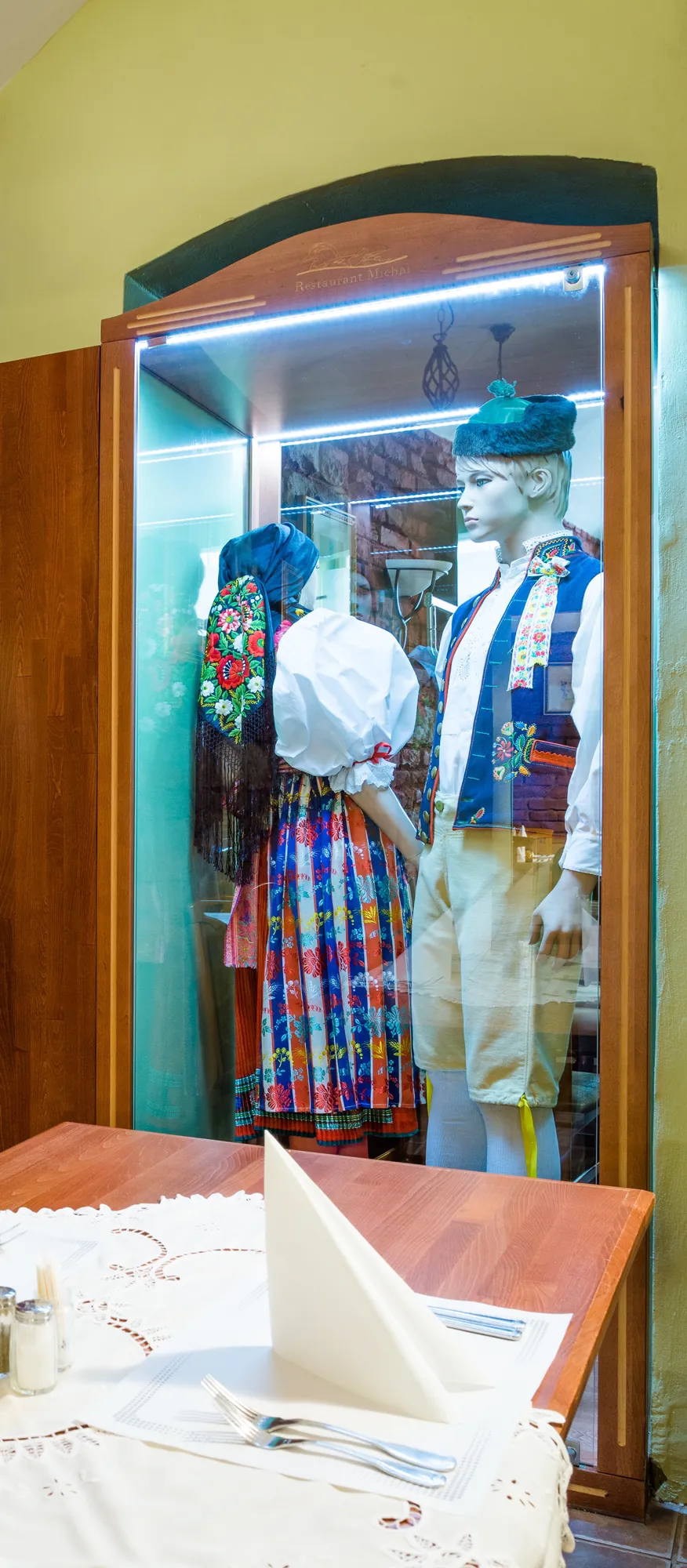
Kroje – region Staré Město (detail)
  1. About the restaurant
  2. The unique folklore collection of costumes and paintings

Collection

The unique folklore collection of costumes and paintings

The restaurant is home to an ever-growing collection of folk costumes from Bohemia, Moravia and Slovakia.

The owners

Great lovers of folklore

In the restaurant you can see our constantly expanding collection of folk costumes. The owners present it and promote folk traditions not only in the restaurant but also by organising various folklore projects.

The restaurant's premises are arranged to showcase Czech, Moravian and Slovak folklore, so that our guests can see and experience as much as possible from the different ethnographic regions.

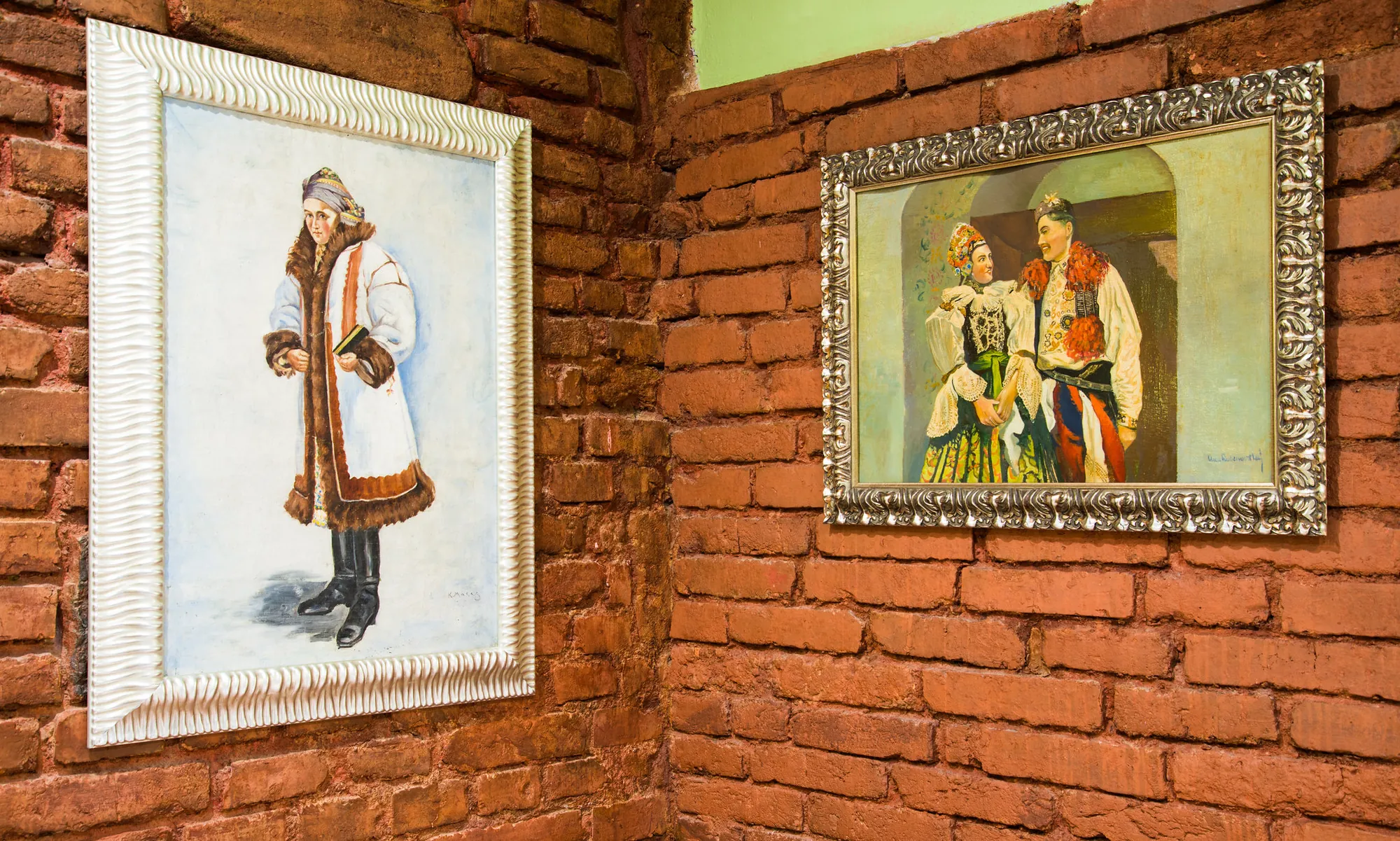
The interiors feature paintings and prints by our leading folklore painters. In the main hall you can see prints from the series “Men's Sheepskin Coats” by our most famous folklore painter, Jožka Úprka (1861–1940). He was a colleague of Alfons Mucha, with whose help he exhibited his paintings at the Salon of French Artists in Paris in 1894. There he received the “Mention Honorable” award for his painting “Pilgrimage to St Anthony”, and thanks to him the Slovácko countryside became known throughout Europe.

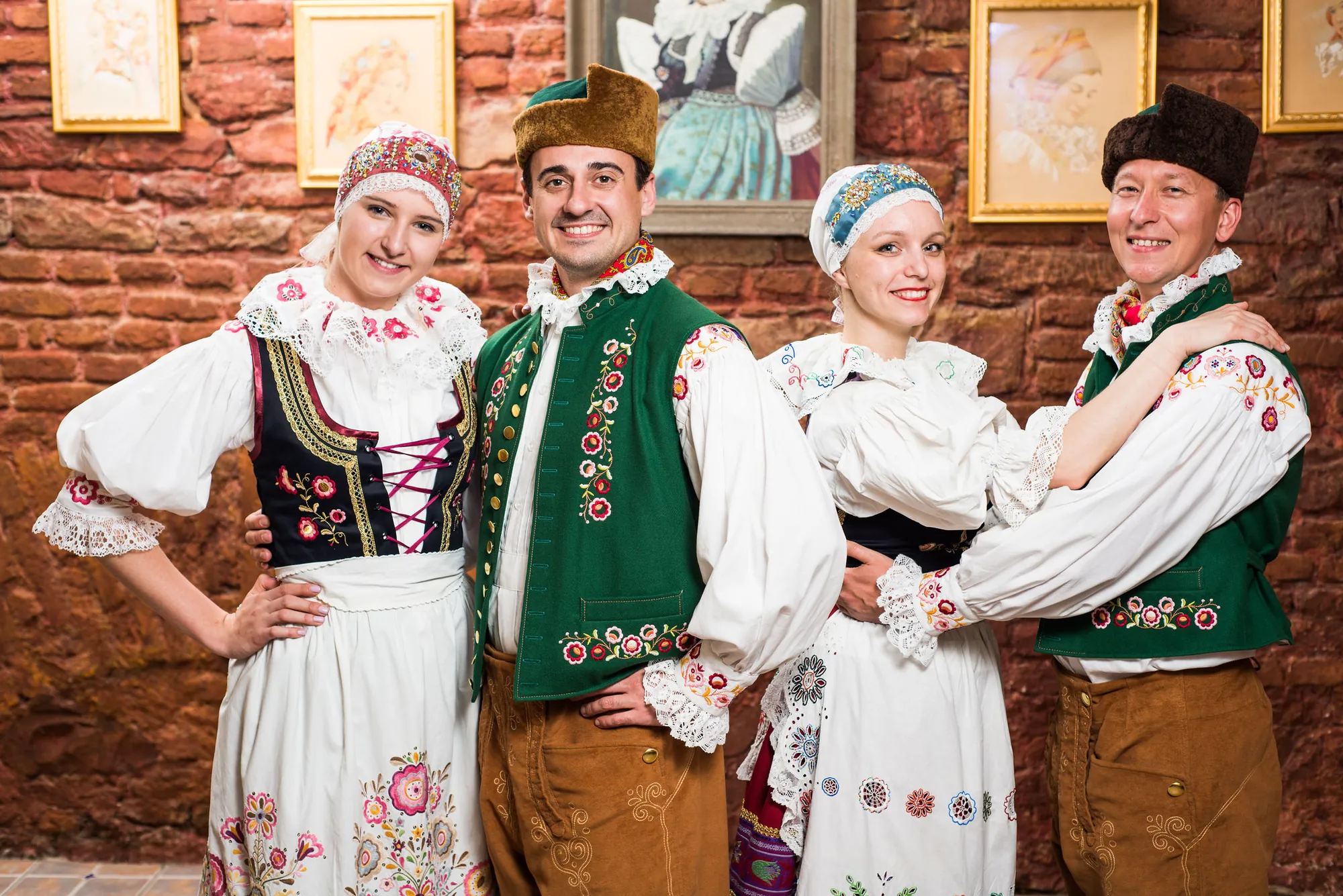
The owners of the restaurant, the Kačírek family, are great lovers of folklore, and their collection already contains more than 70 beautiful, original, hand-embroidered costumes. Some of them are more than 100 years old and very valuable.

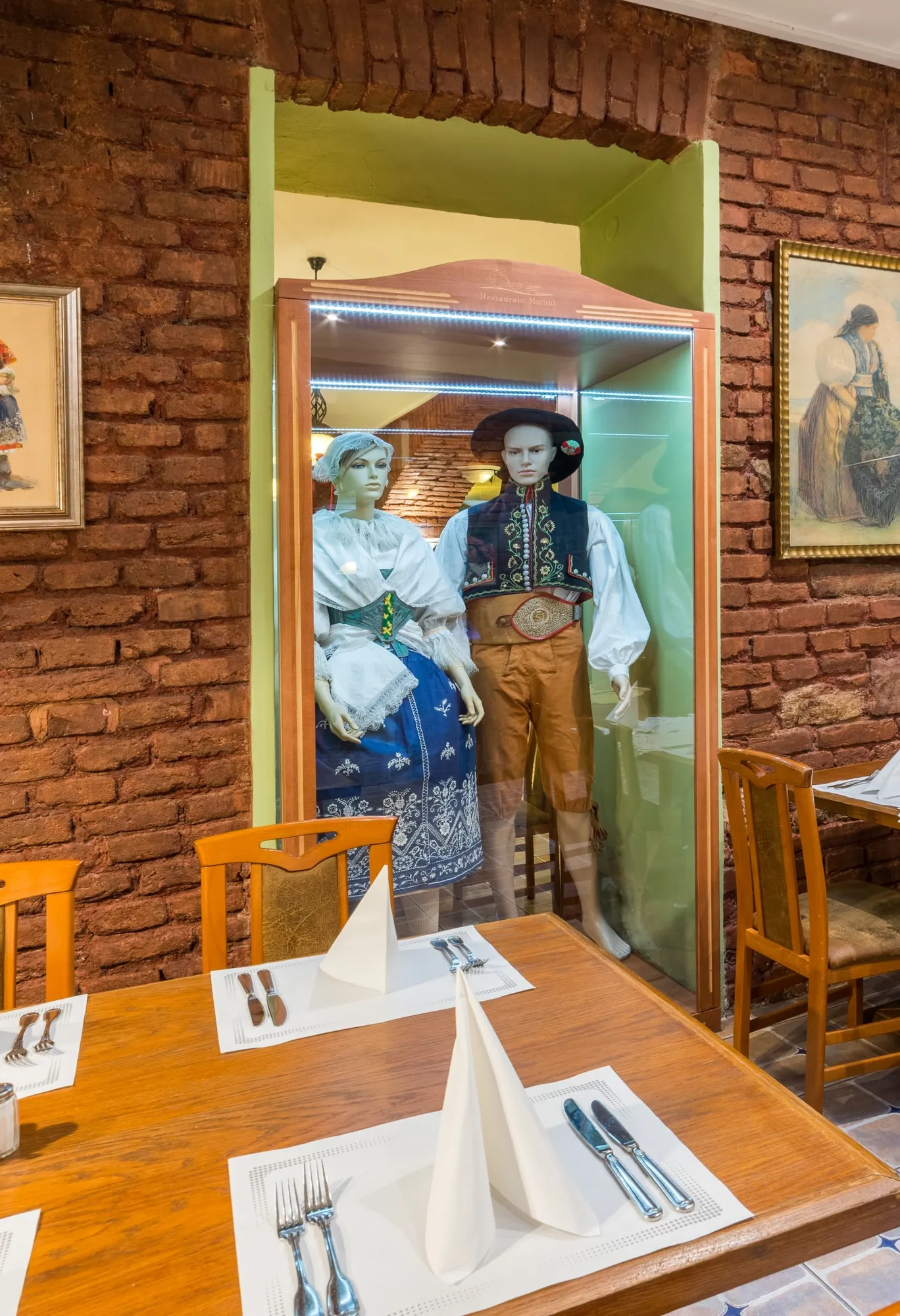
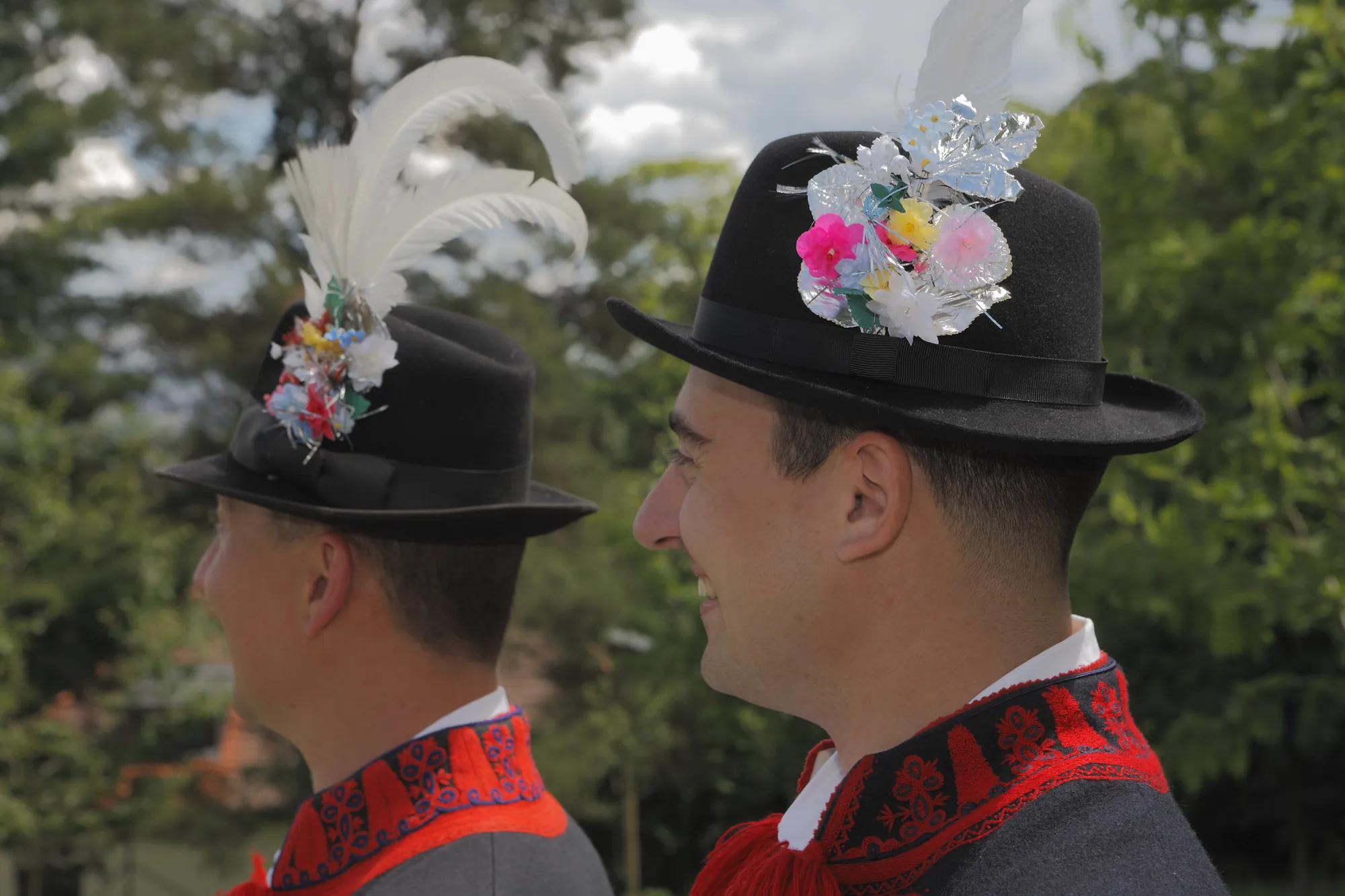
Part of this unique collection is on display in the restaurant in glass cases, which are changed once a year. Guests can thus see old, original, hand-embroidered costumes and their accessories from Western Bohemia all the way to Eastern Slovakia.

The costume display was approved by specialists from the Ethnographic Museum of the National Museum.

Interiér Restaurantu Michal s obrazy

In the main hall you can see prints from the series “Men's Sheepskin Coats” by Jožka Úprka (1861–1940).

Jožka Úprka, a colleague of Alfons Mucha

Currently in the restaurant

Presentation of ethnographic regions

Chodský kroj ve vitríně restaurace
01

The Chodsko region

Western Bohemia

The ethnographic region of Chodsko lies in Western Bohemia around the town of Domažlice. The Chods were free farmers who were historically entrusted with guarding the country's borders. Typical of Chodsko is its very rich folk tradition – folk songs and bagpipe music. These traditions come alive at various festivals, for example the Chod Festival in Domažlice. The region is also famous for its delicious Chod pies (koláče) and folk ceramics with the typical Chodsko pattern.

The costume from Chodsko

Woman and man dressed in folk costumes from Lower Chodsko in Western Bohemia, which were worn in the villages of Mrákov, Klíčov, Tlumačov, Nevolice, Stráž, Chrastavice, Luženice, Újezd, Petrovice, Draženov, Pasečnice, Havlovice, Bořice, Záhořany and Milavče, as well as in the town of Domažlice. The woman's head is adorned with the typically tied, embroidered Chodsko headscarf.
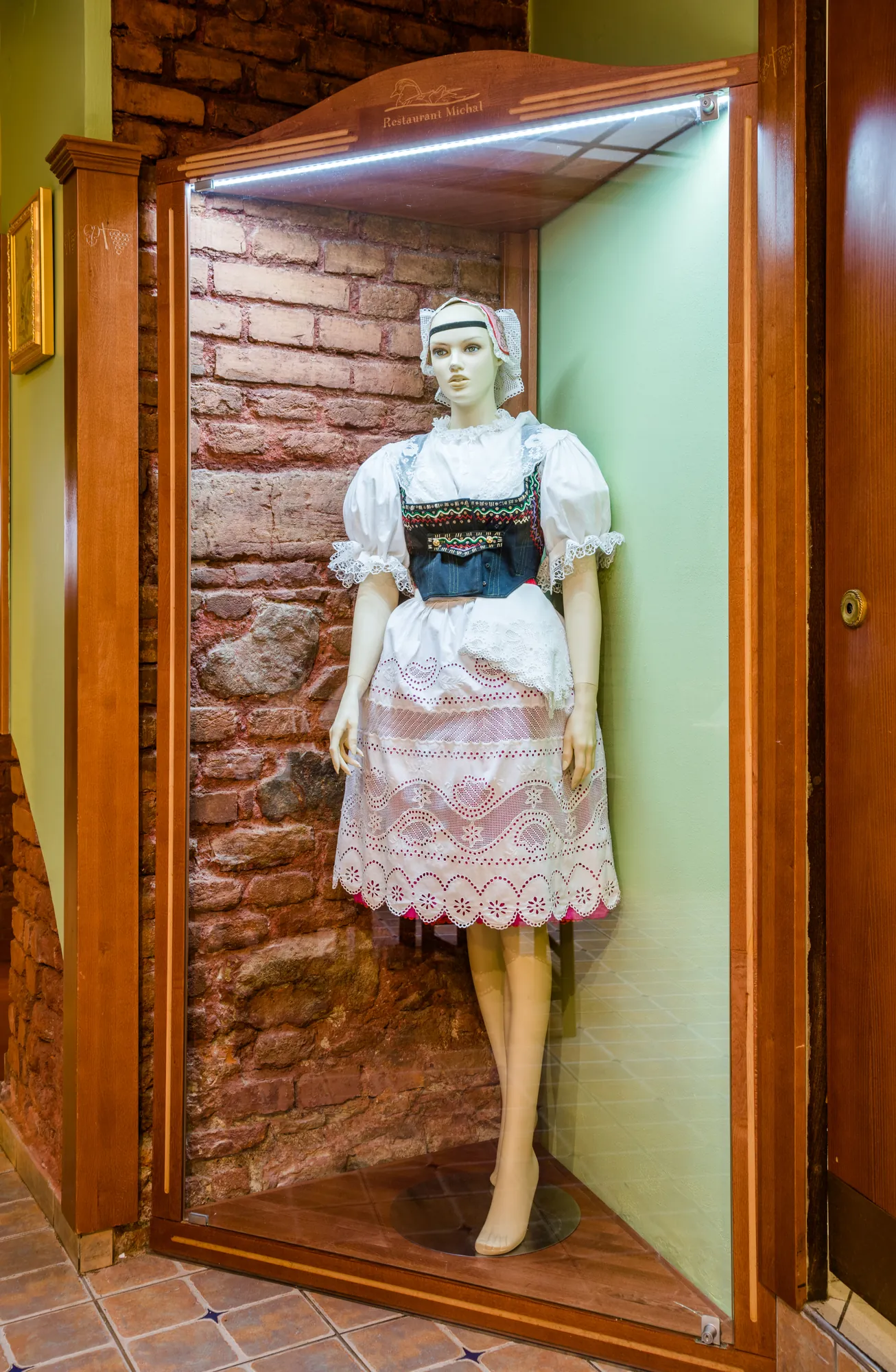
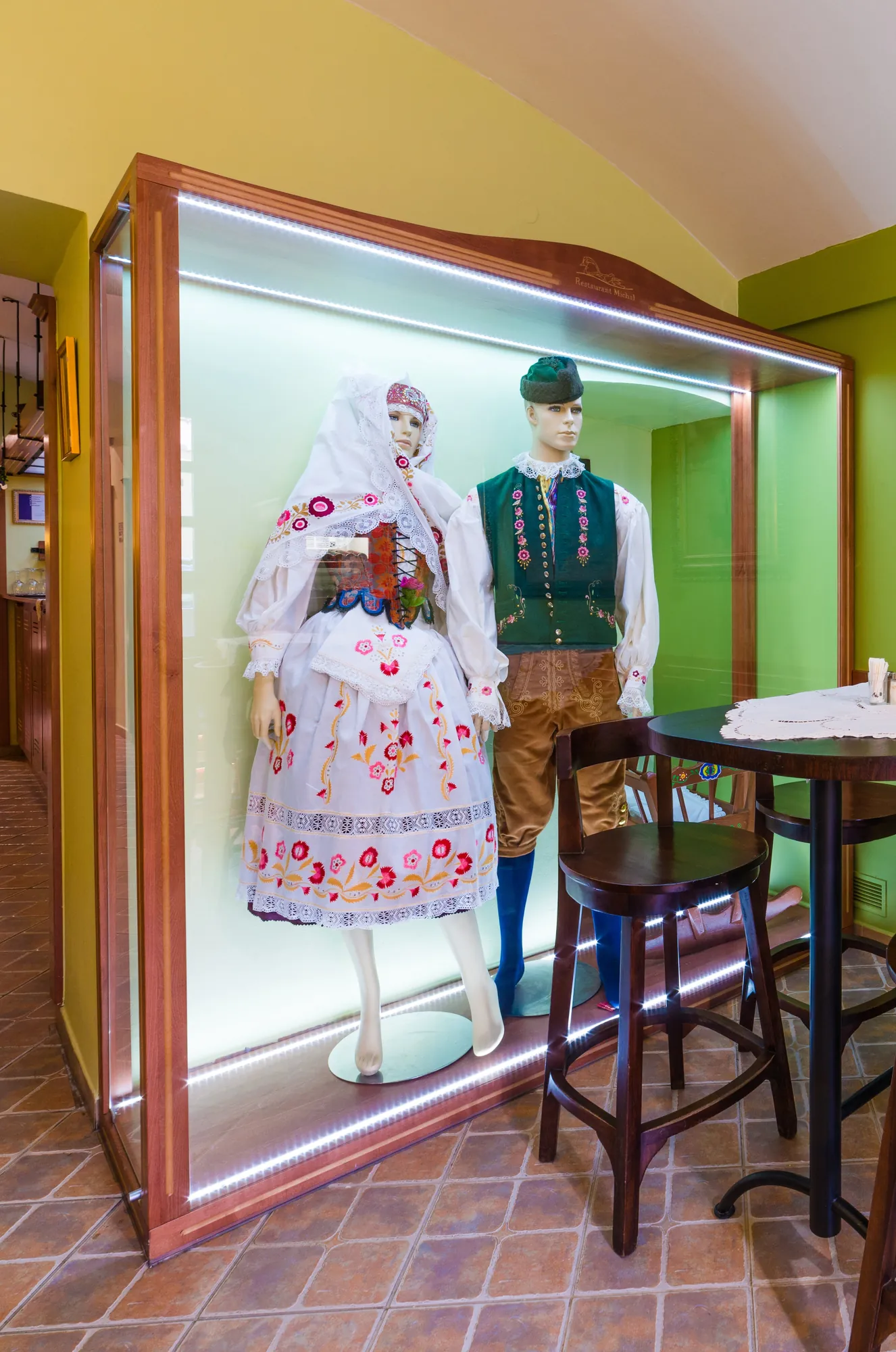
Kroj regionu Kozácko ve vitríně
02

The Kozácko region

Tábor–Milevsko area, South Bohemia

The ethnographic region of Kozácko (Táborsko-Milevsko), also called Táborsko, lies in the northern part of South Bohemia. It is famous for the unique tradition of “obcházení lucek” (the Lucy procession), still kept alive today, which is linked to 13 December, St Lucy's name day. Also well known are the folk songs of Kozácko collected by the secondary-school teacher Čeněk Holas (10 Feb 1855 – 8 Feb 1939), a poet and collector of folk songs and dances, who recorded them in his collection “Czech National Songs and Dances” (6 volumes, Prague 1908–1910).

The costume from Kozácko

Woman dressed in a costume from the South Bohemian region of Táborsko (Kozácko). The costume is decorated with white openwork embroidery.

Kroje regionu jihočeská Blata ve vitríně
03

The South Bohemian Blata region

South Bohemia

The ethnographic region of Blata lies in South Bohemia. It is characterised by a large number of fishponds, established in the 16th century. The region's main hallmark is its rich masonry folk architecture with typical stucco reliefs (so-called rural Baroque).

The costume from South Bohemian Blata

Woman and man dressed in costumes from the South Bohemian region of Blata. The woman's head is adorned with a typical feature of the region – a large linen headcloth (plena) decorated with rich embroidery.

Kroje regionu Polička ve vitríně
04

The Polička region

Eastern Bohemia

The ethnographic region of Polička lies in Eastern Bohemia, in the Svitavy district. The town of Polička is situated near the historic border between Bohemia and Moravia and has many beautiful monuments, for example the town hall, which is a National Cultural Monument. The town is also known for two great figures born here: the Czech-Austrian stenographer Hynek Jakub Heger (5 July 1808 – 11 May 1854), author of the first Czech shorthand system, and above all Bohuslav Martinů (8 Dec 1890 – 28 Aug 1959), the world-famous composer whose works include the beautiful cantata “The Opening of the Wells”.

The costume from Polička

Woman and man dressed in costumes from the East Bohemian region of Polička. The woman wears a typical blue apron decorated with white embroidery. The man's costume features a reconstructed belt; in the past, men's belts were decorated with embroidery made from peacock quills.

Reservations

Book your table in advance

Booking before your visit is necessary. We will confirm your reservation by e-mail or phone – a reservation is only valid once confirmed.

Book a table
Booking before visiting the restaurant is necessary and you can make it online, by phone or by e-mail. Thank you for your understanding, we look forward to your visit.
Call us Reservations